A Time of Justice – Praxedis Guerrero
By Walter Dominguez, on January 1st, 2011
Praxedis Gilberto Guerrero died one hundred years ago on the morning of December 30, 1910. He died a hero for the cause of revolution in his deeply troubled homeland, Mexico. Mexico was collapsing under the oppressive weight of decades of the dictatorship of Porfirio Díaz and the oligarchs who benefited immensely and disproportionally from his policies. In November, 1910, Prax and a comrade rode the train east from Los Angeles, California, where they had established a base for their newspapers and the Partido Liberal Mexicano organization – the PLM – which was founded and led by Ricardo Flores Magón. Praxedis was a brilliant writer, journalist and newspaper editor, and Magón relied on him to run the PLM’s revolutionary activities in the U.S. and Mexico while Los Angeles and U.S. federal authorities kept Magón locked up in Los Angeles County prison. Before boarding the Southern Pacific train to El Paso, Texas, Prax took his personal things to his Los Angeles American friends, the socialists and journalists Ethel and John Kenneth Turner. There he said goodbye, adding that he knew he would never return, and his things should be sent to his sister in Mexico. He was handsome, dashing and well educated; he was from a wealthy provincial family in Mexico. But he had taken up the cause of the poor and dispossessed since childhood. He was just 28 years old and would not live to see his next birthday.
El Paso, Texas, just over the border from the Mexican state of Chihuahua, was filling with refugees from the increasingly dangerous and chaotic country of Mexico, and it was a hotbed of anti-Díaz revolutionaries, and of U.S. and Díaz’s secret agents seeking to apprehend them. In El Paso, Prax called upon men who were veterans of his previous, failed, attempt in 1908 to begin the insurrection against Díaz. On December 19, Guerrero led his force of twenty-two men on horses across the Río Grande into Mexico, hijacked a train, appropriated horses, arms and food, took in more rebels, and on December 29 confronted the authorities of Janos, Chihuahua. The mayor of Janos agreed to surrender the town to Prax’s forces on the morning of December 30. But when Praxedis learned that this presidente municipal had wired for federal troops, Prax launched a surprise attack at 10 P.M. the night of the 29th. By morning, after a long night of intense fighting, the rebels gained control of Janos. But federal troops arrived and during the barrage of bullets that ensued, Prax took to a rooftop and was shot through the eye. He died instantly. The eye that hemorrhaged blood had once looked out at a world of pain and suffering for the masses of Mexican people, and saw beyond it to a time of economic and social fairness, and justice for all. On January 1st, 1911, the voice that was now silent echoed in the minds of surviving companions retreating across the Chihuahua desert, and in the coming years still stirred the hearts of those who had heard Praxedis speak with the strength of conviction and sincerity. And his words and thoughts continue to live on through his powerful writings. By May 1911 Porfirio Díaz was forced into exile, and the ten year long Mexican Revolution had begun and there was no turning back. One out of five Mexicans died from the chaos and violence. Hundreds of thousands fled the country and most went to the U.S. Southwest, especially booming Los Angeles where safety and jobs could be found. Eventually, peace returned to Mexico and a new social order began to take shape.
No one knows for certain if the body inside the monument built to house his remains in the capital city of Chihuahua, in the state of Chihuahua, is actually that of Praxedis Gilberto Guerrero, but he is remembered and honored as one of Mexico’s national heroes. One hundred years after his death, however, violence and fear have returned to Mexico, and his impassioned call for a world of social and economic equality and justice awaits fulfillment.
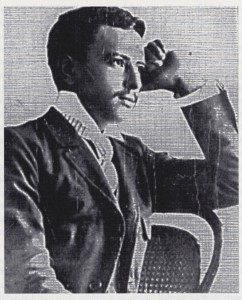
 Praxedis Guerrero - A young fighter for justice
You must be logged in to post a comment.
|
|
Support Whitewashed Adobe With your tax-deductible donation.
Whitewashed Adobe: The Rise of Los Angeles is dependent on grants, and private and corporate donations for funding. Help to support this historic and vital documentary project with your tax-deductible donation through our 501(c)(3) non-profit fiscal sponsor The International Documentary Association (IDA).

Special Thanks 
This project is made possible, in part, by a grant from the California Council for the Humanities in partnership with the Skirball Foundation, through the jointly supported California Documentary Project, a program of the California Stories Initiative.
Additional Support
- The JKW Foundation
- Jean Stein
- Shelley Morrison
- Greg & Carole Garneau
Read The Book This project is based on William Deverell's critically acclaimed book WHITEWASHED ADOBE: THE RISE OF LOS ANGELES AND THE REMAKING OF ITS MEXICAN PAST.
Available from UC Press.
Images
Photographic & Postcards Images Acknowledgements: • The Huntington Library, San Marino, California • La Plaza History Society & Archive, Los Angeles, California • Bancroft Library, University of California, Berkeley • California History Room, California State Library, Sacramento • Seaver Center for Western History Research, Los Angeles County Museum of Natural History, Los Angeles • Collection of William Deverell, Pasadena, California • Archivo Práxedis, Los Angeles, California. All rights reserved by the copyright holders. No reproduction without permission.
|
A Time of Justice – Praxedis Guerrero
Praxedis Gilberto Guerrero died one hundred years ago on the morning of December 30, 1910. He died a hero for the cause of revolution in his deeply troubled homeland, Mexico. Mexico was collapsing under the oppressive weight of decades of the dictatorship of Porfirio Díaz and the oligarchs who benefited immensely and disproportionally from his policies. In November, 1910, Prax and a comrade rode the train east from Los Angeles, California, where they had established a base for their newspapers and the Partido Liberal Mexicano organization – the PLM – which was founded and led by Ricardo Flores Magón. Praxedis was a brilliant writer, journalist and newspaper editor, and Magón relied on him to run the PLM’s revolutionary activities in the U.S. and Mexico while Los Angeles and U.S. federal authorities kept Magón locked up in Los Angeles County prison. Before boarding the Southern Pacific train to El Paso, Texas, Prax took his personal things to his Los Angeles American friends, the socialists and journalists Ethel and John Kenneth Turner. There he said goodbye, adding that he knew he would never return, and his things should be sent to his sister in Mexico. He was handsome, dashing and well educated; he was from a wealthy provincial family in Mexico. But he had taken up the cause of the poor and dispossessed since childhood. He was just 28 years old and would not live to see his next birthday.
El Paso, Texas, just over the border from the Mexican state of Chihuahua, was filling with refugees from the increasingly dangerous and chaotic country of Mexico, and it was a hotbed of anti-Díaz revolutionaries, and of U.S. and Díaz’s secret agents seeking to apprehend them. In El Paso, Prax called upon men who were veterans of his previous, failed, attempt in 1908 to begin the insurrection against Díaz. On December 19, Guerrero led his force of twenty-two men on horses across the Río Grande into Mexico, hijacked a train, appropriated horses, arms and food, took in more rebels, and on December 29 confronted the authorities of Janos, Chihuahua. The mayor of Janos agreed to surrender the town to Prax’s forces on the morning of December 30. But when Praxedis learned that this presidente municipal had wired for federal troops, Prax launched a surprise attack at 10 P.M. the night of the 29th. By morning, after a long night of intense fighting, the rebels gained control of Janos. But federal troops arrived and during the barrage of bullets that ensued, Prax took to a rooftop and was shot through the eye. He died instantly. The eye that hemorrhaged blood had once looked out at a world of pain and suffering for the masses of Mexican people, and saw beyond it to a time of economic and social fairness, and justice for all. On January 1st, 1911, the voice that was now silent echoed in the minds of surviving companions retreating across the Chihuahua desert, and in the coming years still stirred the hearts of those who had heard Praxedis speak with the strength of conviction and sincerity. And his words and thoughts continue to live on through his powerful writings. By May 1911 Porfirio Díaz was forced into exile, and the ten year long Mexican Revolution had begun and there was no turning back. One out of five Mexicans died from the chaos and violence. Hundreds of thousands fled the country and most went to the U.S. Southwest, especially booming Los Angeles where safety and jobs could be found. Eventually, peace returned to Mexico and a new social order began to take shape.
No one knows for certain if the body inside the monument built to house his remains in the capital city of Chihuahua, in the state of Chihuahua, is actually that of Praxedis Gilberto Guerrero, but he is remembered and honored as one of Mexico’s national heroes. One hundred years after his death, however, violence and fear have returned to Mexico, and his impassioned call for a world of social and economic equality and justice awaits fulfillment.
Praxedis Guerrero - A young fighter for justice